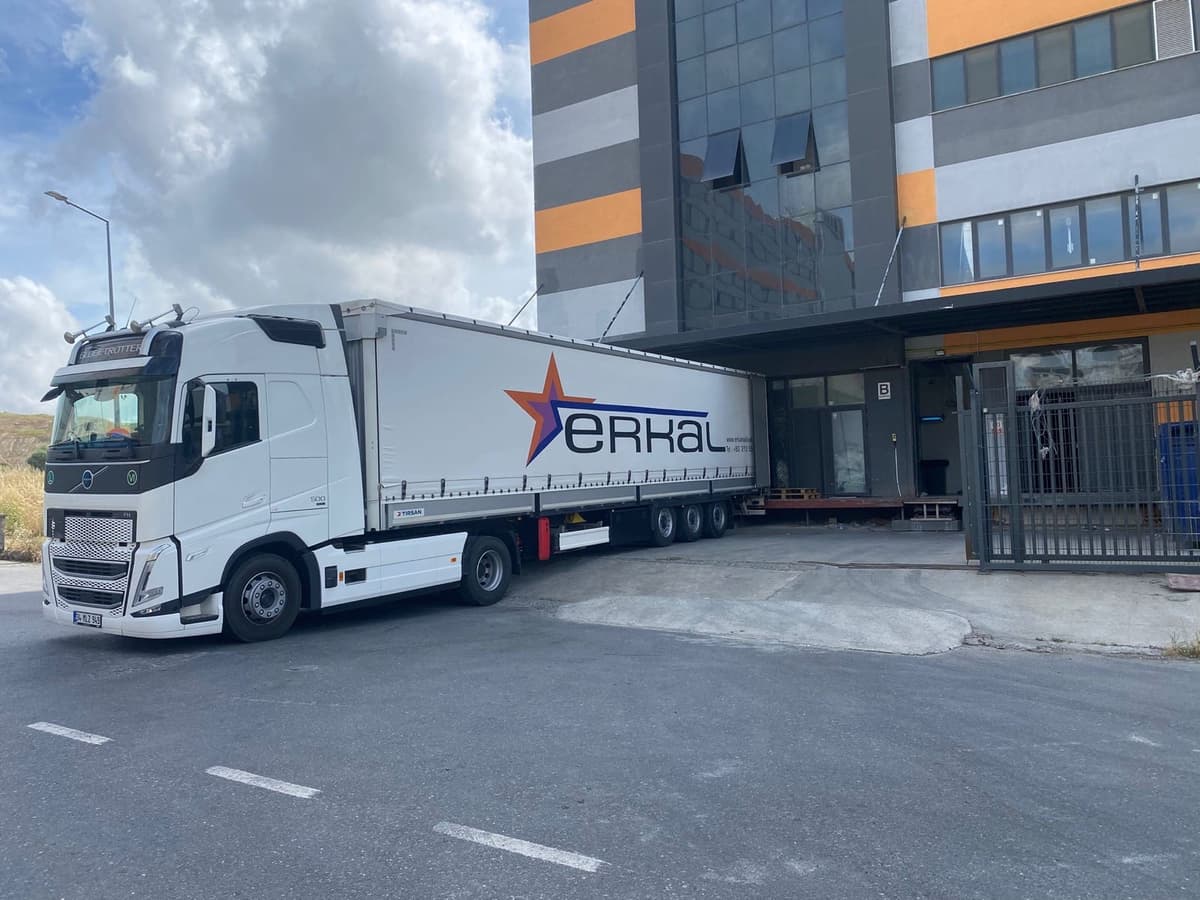
A warehouse is not where cargo waits. It is where cargo is made ready. The quality of a shipment is settled at the goods-in ramp, long before the vehicle turns onto the road.
By the time a trailer backs onto the ramp, most of what will go right or wrong has already been decided.
What goes into the goods-in record
Everything downstream rests on what is captured on arrival:
- Product type and HS code
- Pallet and carton count
- Gross weight, dimensions, cubic metres
- Packaging type and label data
- Damage inspection, at the moment of receipt
- Dispatch date and destination lane
An error here that survives to dispatch day gets corrected at the loading ramp — the most expensive place for it.
The EUR pallet: why a standard exists
A standard EUR pallet (EPAL) measures 1200 × 800 mm, built to the UIC 435-2 standard. Two sit side by side across the 2.4 m of usable internal width in a standard European trailer.
Capacity is standardised too: the dynamic load — what the pallet may carry in motion — is capped at 1,500 kg. On groupage we prefer 800 to 1,000 kg per pallet, because the upper tier of a stack has to stay safe.
A non-standard footprint leaves a gap on the trailer floor. Nobody can use it, and its cost is written against the cargo that created it.
Stackability: the key to shared capacity
Where another consignment can sit on top of yours, the same floor area is sold twice — straight through to what you pay. Typical obstacles:
- Items overhanging the pallet footprint
- An uneven top surface
- Packaging that will not carry a top load
- Fragile or pressure-sensitive products
That a consignment cannot be stacked must be known at goods-in. Discovered during loading, the plan around it collapses.
Cross-dock and consolidation
Cross-docking sorts inbound cargo straight onto an outbound vehicle, with no meaningful storage between. It cuts inventory cost and shortens transit.
Consolidation merges goods from different consignors bound for the same lane. It is the foundation of partial transport.
The difference is not how long the cargo stays, but why: under cross-dock it waits to be transferred, under consolidation it waits for the other consignments.
Load order is a plan, not an accident
The loading sequence is decided in advance by:
- Drop sequence — the first consignment off goes on last.
- Weight distribution — under Directive 96/53/EC a single non-driving axle carries up to 10 tonnes, a driving axle up to 11.5 tonnes. A trailer can be legal in total and illegal on an axle.
- Stack strength — heavy pallets low, light and fragile ones high.
- Unloading method — ramp, forklift or side loading?
Axle loads are enforced separately from the gross figure: nothing conceded on the total forgives an overloaded axle.
The last check before departure
- Do the pallet count and the labels match the packing list?
- Has any packaging been damaged?
- Is the load secured — straps, edge protectors, shrink wrap?
- Are consignor, consignee and address correct on the CMR?
- Do the customs documents leave with the vehicle?
All five are checked at the ramp. Correcting them later is possible, and costly.
Warehousing and transport are not separate processes here: consolidation and distribution warehouse, temporary storage and handling and logistics and warehousing run inside one flow. Send the product type and the dispatch date through the quote form.